Goodful cookware is built for everyday use – quick scrambled eggs, weeknight stir-fries, the Sunday sauce that simmers for hours. But the non-stick coating that makes those meals effortless is also the part most people accidentally ruin through poor cleaning habits.
Learning how to clean Goodful cookware properly takes five minutes to read and saves you from replacing pans every year. The short answer is warm water, a soft sponge, mild dish soap, and patience with stuck-on residue. The details matter though, and a few of them are easy to get wrong.
Quick Reference: Cleaning by Problem
|
Problem |
Method |
Time Needed |
|
Everyday food residue |
Warm water + dish soap + soft sponge |
2-3 minutes |
|
Stuck-on food |
Warm soak |
15-30 minutes |
|
Cooked-on buildup |
Baking soda paste |
10-15 minutes |
|
Interior discoloration |
White vinegar + water simmer |
10 minutes |
|
Exterior staining |
Baking soda + water paste |
5-10 minutes |
Let the Pan Cool First
This is the most important step – and the one most people skip.
Running a hot non-stick pan under cold tap water causes thermal shock. The rapid temperature change forces the metal to contract suddenly, weakening the bond between the pan body and the coating. Over time, this leads to warping and early coating failure.
After cooking, set the pan aside for 10-15 minutes before washing. This applies to Goodful’s ceramic non-stick pieces, the titanium-reinforced pans, and any stainless steel items in the line.
How to Hand Wash Goodful Cookware
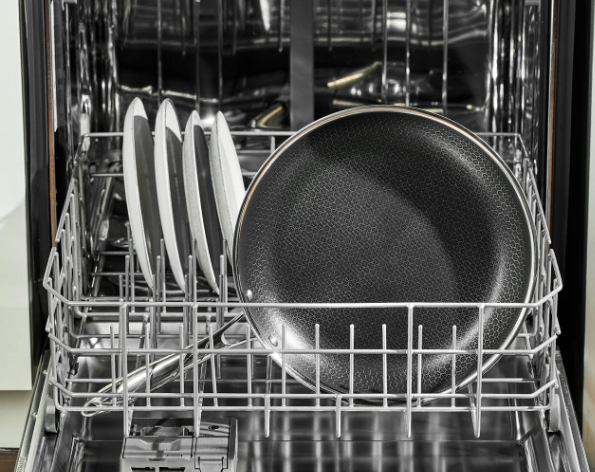
Hand washing is the recommended cleaning method for all Goodful non-stick cookware, even if the label says dishwasher safe. Dishwashers combine high heat, harsh detergents, and aggressive water jets in ways that degrade the coating much faster than hand washing does.
What You’ll Need
- Warm (not hot) water
- A few drops of mild dish soap
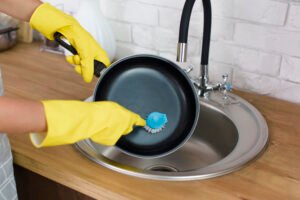
- A soft sponge, microfiber cloth, or non-abrasive scrubber pad
- A soft dish towel for drying
What to avoid: Steel wool, scouring pads, stiff-bristled brushes, and abrasive powders like Comet or Ajax. These scratch the non-stick surface, creating micro-grooves where food sticks more readily – and the coating degrades faster from that point forward.
Step-by-Step
- Let the pan cool completely after cooking.
- Apply a small amount of dish soap to a damp soft sponge.
- Wash in gentle circular motions, covering the interior and exterior.
- Rinse thoroughly with warm water.
- Dry immediately with a soft towel – don’t air dry. Standing water causes spotting and, on the exterior finish, can cause gradual discoloration.
Most Goodful pans clean up completely in under two minutes this way.
How to Remove Stuck-On Food
Even with a quality non-stick surface, food occasionally sticks – especially with sugary glazes, egg proteins cooked at high heat, or anything that scorched before you caught it. The instinct is to scrub harder. That’s the wrong move.
The Soak Method
Works for most stuck-on residue, and it should always be your first attempt:
- Add enough warm water to cover the stuck area.
- Add a few drops of dish soap.
- Let the pan soak for 15-30 minutes.
- Wipe away the loosened residue with a soft sponge, no scrubbing necessary.
This works because heat bonds food proteins to surfaces. Time and warm water reverse that bond naturally.
The Baking Soda Paste Method
For stubborn cooked-on buildup that a soak doesn’t fully clear:
- Mix 2 tablespoons of baking soda with just enough water to form a thick paste.
- Apply the paste to the affected area.
- Let it sit for 10-15 minutes.
- Wipe away gently with a soft sponge.
Baking soda is mildly abrasive but safe for non-stick coatings when used as a paste rather than applied as dry powder. Avoid Bar Keepers Friend and oxalic-acid-based cleaners on non-stick surfaces, they’re formulated for stainless steel and will damage the coating.
Can You Put Goodful Cookware in the Dishwasher?
Some Goodful pieces are labeled dishwasher safe, and technically, you can use them that way. But if you want the coating to last two or three years rather than one, hand washing is worth the extra sixty seconds.
Dishwashers strip the protective oil film from the coating surface, degrade the non-stick layer through repeated heat-dry cycles, and expose the pan to caustic detergents not designed for delicate coatings. You won’t notice the damage on the first wash or the fifteenth – but by the fiftieth, the performance difference is clear.
If you do put Goodful pans in the dishwasher:
- Use the bottom rack only, positioned away from the heating element
- Skip the heated dry cycle
- Use a gentle detergent formulated for non-stick cookware
Removing Discoloration and Staining
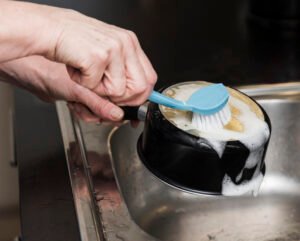
Goodful pans sometimes develop brownish or yellowish discoloration on the interior or exterior from heat exposure, mineral deposits in tap water, or oil residue that wasn’t fully cleaned over time. These stains don’t affect cooking performance, but they can be removed.
For interior discoloration:
- Fill the pan with equal parts white vinegar and water.
- Bring the mixture to a gentle simmer on the stove for about 10 minutes.
- Let it cool completely, then discard the liquid and wash the pan normally.
The mild acidity of white vinegar dissolves mineral deposits without harming the coating.
For exterior staining and buildup:
The exterior of Goodful pans is typically more durable than the interior cooking surface. Apply a paste of baking soda and water, let it sit for a few minutes, then scrub gently with a soft cloth in circular motions.
Drying and Storing Your Goodful Cookware
How you dry and store pans is just as important as how you wash them.
Drying: Towel-dry every pan immediately after rinsing. Air-drying on a rack allows water to sit against the metal, which causes spotting on the interior and gradual oxidation on the exterior finish.
Storing: Avoid stacking pans directly on top of each other. The hard bottom edge of one pan will scratch the cooking surface of the pan below it, and that damage is permanent. If you have to stack, place a pan protector, folded kitchen towel, or paper plate between each piece.
Hanging pans on a wall-mounted rack is the ideal storage method for longevity.
Everyday Habits That Damage the Coating
Cleaning is only part of the equation. These common habits degrade Goodful non-stick coatings faster than any single cleaning mistake:
- Cooking on high heat. Goodful non-stick performs best on low to medium heat. Sustained high heat breaks down the coating chemistry and reduces performance over time.
- Metal utensils. Spatulas, tongs, or spoons with metal tips scratch the surface. Use silicone, wood, or nylon instead.
- Aerosol cooking spray. Sprays like PAM create a polymer residue that bakes onto the surface and is nearly impossible to remove without abrasive cleaners. Pour a small amount of oil directly into the pan instead.
- Skipping the conditioning step. After washing a new Goodful pan, rub a small amount of cooking oil across the interior with a paper towel, heat on low for 60–90 seconds, then wipe out the excess. This conditions the surface and is worth doing after every wash.
Frequently Asked Questions
Can I use olive oil in Goodful cookware?
Yes. Olive oil works well in Goodful pans on low to medium heat. Avoid cooking with it at high temperatures – olive oil has a lower smoke point than neutral oils like avocado or grapeseed and can leave residue that builds up on the surface over time. For high-heat cooking, switch to an oil with a higher smoke point.
Why is my Goodful pan losing its non-stick properties?
The most common causes are high-heat cooking, metal utensil use, and dishwasher cleaning. Aerosol cooking spray also leaves a polymer film that accumulates on the surface and physically interferes with the non-stick effect. Start by doing a deep clean with baking soda paste, this often restores noticeable performance.
How do I remove burnt oil buildup from a Goodful pan?
Mix baking soda with a small amount of dish soap to form a thick paste. Apply it to the affected area, let it sit for 15-20 minutes, then wipe away with a soft sponge. For very heavy buildup, repeat the process. Don’t use scouring pads – they remove the buildup along with the coating underneath.
Is Goodful cookware safe to use if the coating is scratched?
Goodful’s non-stick cookware uses PTFE-free, PFOA-free coatings on most of their lineup. Minor surface scratches don’t typically pose a health concern, but they will affect non-stick performance noticeably. If the coating is significantly chipped or visibly peeling, it’s worth replacing the piece.
Can I use Goodful cookware on an induction cooktop?
Not all Goodful cookware is induction-compatible. Check the bottom of the pan for the induction symbol (a horizontal coil icon) before using it on an induction cooktop. If the symbol isn’t present, the pan won’t heat on induction. Refer to the product listing on Target’s website for the specific piece if you’re unsure.
How often should I condition my Goodful non-stick pan?
After every wash is ideal. The process takes 30 seconds: wipe the clean, dry pan with a few drops of cooking oil on a paper towel, heat on low for 60-90 seconds, then wipe out any excess. This keeps the surface performing well and adds years to the coating’s life.
Why does food stick even though my Goodful pan is non-stick?
There are three common causes: the pan wasn’t preheated long enough before adding food, spray oil has created a residue layer on the surface, or the coating is worn down. Start with a deep baking soda paste clean. If sticking persists after cleaning, the coating may be at end of life.
Keeping Goodful Cookware Performing Well
Goodful pans hold up well with consistent care – the coating is durable as long as it’s not fought against. Most of the habits that ruin non-stick cookware aren’t careless; they’re just habits picked up before anyone explained what the coating actually needs.
Warm water, a soft sponge, and a few extra minutes of patience with stuck-on food covers most of it. Avoiding high heat, metal utensils, and aerosol sprays during cooking covers the rest.
If you found this useful, the Goodful cookware buying guide on this site covers the full product lineup with recommendations based on cooking style and household size. The Goodful vs. Caraway comparison is worth reading if you’re evaluating ceramic non-stick options before your next purchase.